
After completing 16 travel nursing contracts across 8 different cities, I’ve learned that no two hospitals are ever the same. In each hospital review breakdown, I’ll cover the factors that mattered most to me as a travel nurse: patient ratios, unit culture, traveler friendliness, floating expectations, charting systems, pay, and the overall day-to-day experience. My goal is to give you an honest look at what these contracts actually felt like beyond the job listing.
My First Contract: Medical City in Dallas, Texas
My NICU contract at Medical City in Dallas was, without question, my least favorite travel nurse experiences. The unit was split across two different floors and the structure of the NICU heavily impacted assignments. Upstairs is were majority of the travel nurses were placed and we always got feeder-growers. The patient ratio for these assignments were always 1:4, while the other floor had more staff presence and generally better 1:3 assignments.
For the majority of my contract, I was consistently assigned the heavier 1:4 feeder-grower assignments, which made already busy shifts feel even more overwhelming. Things only improved after I became friendly with a sweet older charge nurse who began placing me in the 1:3 assignments more often.
Because the shifts were so task-heavy, there was very little downtime for meaningful staff interaction. Even though there were plenty of other travelers on the unit, I found it surprisingly difficult to form friendships or build connections at work because everyone was constantly moving.
I never floated to another unit, which at least provided some consistency. The charting experience added another layer of frustration. I had to learn both Meditech and CPM, two systems that felt incredibly outdated and cumbersome compared to what I was used to.
Financially, this contract paid extremely well at around $3,800 per week. For reference, this was summer 2022 when rates above $3,000/week were still fairly common. If I’m being completely honest, the paycheck was the only thing that kept me going. I couldn’t wait to leave this contract and spent much of it counting down the days.
St. Luke’s in Boise, Idaho

My NICU contract at St. Luke’s Health System in Boise came with a consistent 1:3 patient ratio. The shifts still felt generally busy. A lot of that had less to do with acuity and more to do with the physical layout of the unit. The NICU was designed like a classic ICU with glass sliding doors, but each room connected to the next and those connecting doors were left open at all times. Nurses charted inside the rooms on COWs (computers on wheels) meaning you were physically stationed in the patient rooms for the entire shift rather than at a central nurses’ station.
The layout created some unique challenges. With two patients per room (and sometimes even three!) the unit often felt cramped and chaotic, especially when families came to visit. Because nurses were spread out and tucked inside rooms, it was also difficult to tell when someone was drowning or needed help. That same setup made building relationships on the unit harder as well. Even though connection is usually one of the things I value most during a contract, I found it difficult to form meaningful friendships with staff or other travelers because there just wasn’t much natural interaction throughout the day.
One major perk of this contract was that I landed a straight day-shift position, which made a huge difference for my sleep and overall routine. That alone made the experience better than it otherwise might have been. The pay was decent—if I remember correctly, around $2,700 per week—which felt fair but not exceptional for what travel rates were at the time. They charted in Epic, which was a major plus since it’s one of the more intuitive systems to work in. I never floated to another unit, which provided some stability. Overall, I enjoyed Boise itself more than I expected but hospital wise the unit layout made me feel a bit drained at the end of each day. I ultimately chose to stay only three months. This was summertime into fall of 2022.
Rady Children’s in San Diego, California

My NICU contract at Rady Children’s Hospital was my first experience with California nursing, and it completely changed my expectations of travel assignments. Despite hearing the nickname “Shady Rady,” I had a very positive experience overall. No hospital is perfect, but I never felt that reputation matched my experience.
I almost always had 1:2 patient ratios in the main NICU, a newer ICU-style unit with glass sliding doors. Rady also had an older overflow unit for feeder-growers, where I occasionally had 3 patients, though this was rare. This was the first contract where I truly felt welcomed by staff. The unit was very traveler-friendly! Nearly half the unit was made up of travelers when I started so it was easy to make friends. Two of my closest travel nurse friendships came from this assignment.
The biggest downside was floating. Rady staffs multiple satellite hospitals and I floated to another location about once a week, often with little notice. I also floated a few times to PICU, Cardiac ICU, and once to the floor. Still, after not loving my previous contracts, the frequent floating felt worth it even for the full year that I stayed here.
This was also my first time using Epic, which I loved. Pay was excellent! Around $4,000/week during the first three months of crisis staffing while picking up a mandatory extra shift every other week. Then pay dropped to around $3,800/week afterward and larger rate drops with every extension that followed (although it never fell below $3,000/week). Between the safe ratios, strong pay, and friendships I made, this remains one of my most positive work experiences. I worked here from December 2022 to November 2023.
Seattle Children’s in Seattle, Washington

I absolutely fell in love with Seattle, but my experience at Seattle Children’s was the complete opposite. This was a dream hospital for me because of its reputation, which made it even more disappointing when it became one of my hardest contracts due to how I was treated as a traveler.
Patient ratios were always 1:2, but out of the seven months I worked there, I only spent about four weeks in my actual specialty, the NICU. I spent a little over a month in PICU (which I actually grew very fond of) and literally every other shift I was worked in the Cardiac ICU. These kids were incredibly sick, codes were common and all the while support often felt lacking. I’ll never forget overhearing a resource nurse openly say she refused to help travelers, which felt especially concerning in such a high-acuity setting.
Looking back on my travel nursing career, this is something I would not put up with nowadays. I would not put myself in an unsafe situation like this again. Moving forward, this is a contract I would cancel due to an unsafe environment.
Ironically, while work was difficult, this was the best social experience of my travel career. The only nurses consistently kind to me were other travelers, and I built a close group of about 10 friends with an active group chat. I honestly only kept extending because I loved the city and wanted more time with those friends. Pay was around $2,700 per week, and they used Epic. This contract taught me that a hospital’s good reputation doesn’t always equate to being treated well as a traveler.
UCSF Benioff Children’s in Oakland, California
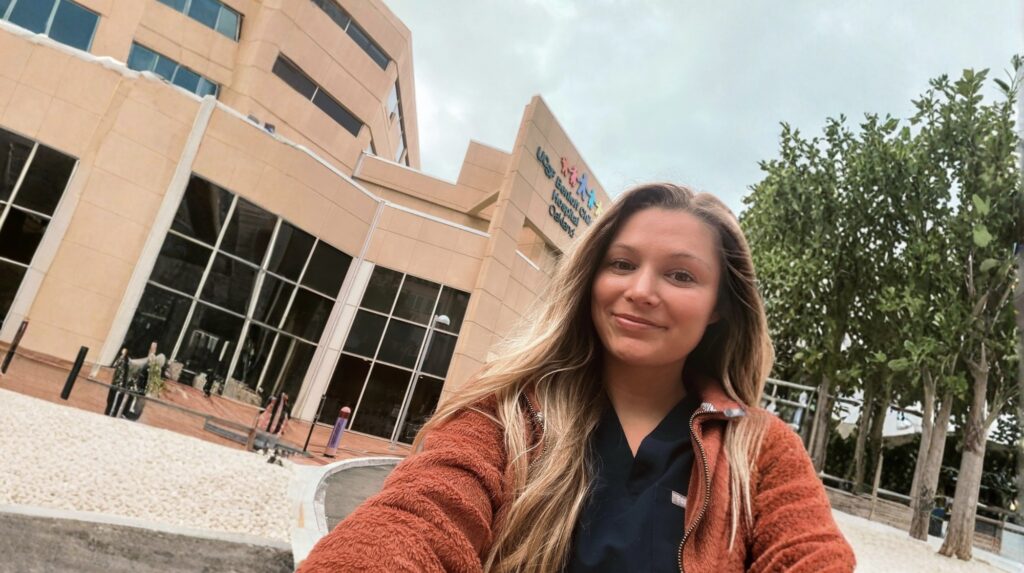
My NICU contract at UCSF Benioff Children’s Hospital Oakland brought me back to California nursing and gave me my first taste of the Bay Area standard that so many nurses rave about. With consistent 1:2 patient ratios, I quickly understood the appeal. One of the biggest perks was mandatory breaks covered by dedicated relief nurses, which meant I could actually step away knowing my patients were in good hands.
The NICU was an open unit, which could feel overstimulating from a noise perspective but on the other hand made me feel safe and supported during shifts. The biggest challenge was scheduling. Most staff worked 8-hour shifts while travelers worked 12s, so my assignment changed at 3 p.m. almost every day. That constant handoff became a bit draining over time. I only floated a handful of times to PICU and the floor.
The open layout made it easy to casually talk with the nurses around you and I found it equally easy to connect with both staff and other travelers. Staff were consistently helpful when things went wrong and seemed very accustomed to travelers. Since staff nurses were well compensated themselves, I never sensed resentment or tension around traveler pay. I made about $2,800 per week (much less than staff make – haha) which felt decent on paper but honestly didn’t go very far given the Bay Area’s high cost of living. For reference, I spent three months here from September to December 2024.
St. David’s in Austin, Texas
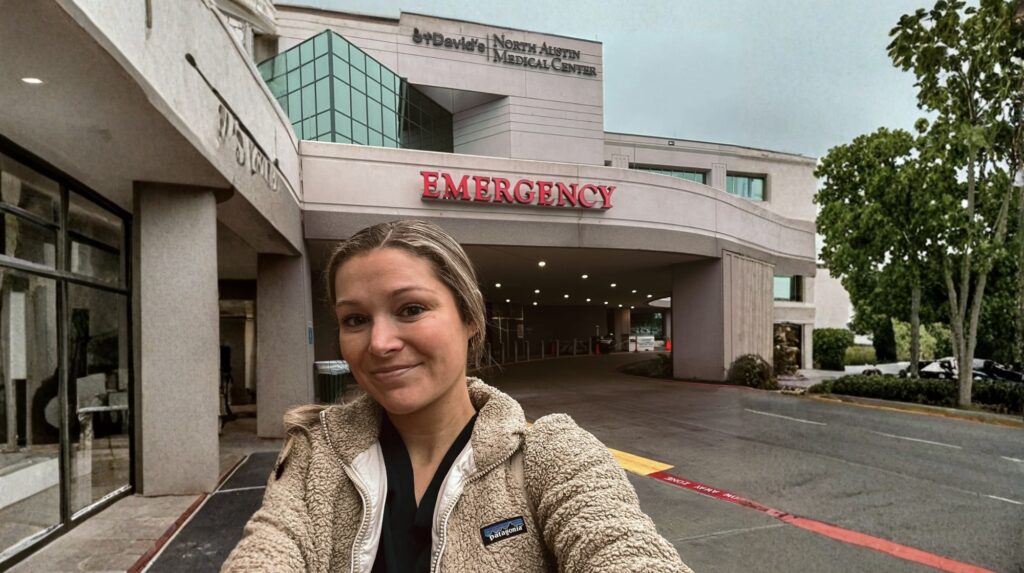
My NICU contract at St. David’s HealthCare in Austin came at a time when I really needed a reset after a difficult experience in Seattle and some emotionally heavy patient situations in Oakland. Here I had consistent 1:3 patient ratios, almost always with feeder-growers, and this was the first contract where I wasn’t given much acuity. I didn’t have strong feelings about that since, in my mind, I’m paid the same either way, and straight day shifts with stable assignments honestly felt like the break I needed.
The unit itself felt older, with a somewhat unusual layout that looked like a mix of traditional ICU rooms with glass sliding doors and open-bay sections from multiple expansions over time. Most shifts kept me busy enough that there wasn’t much downtime to chat, and my neighboring nurses usually seemed just as busy. Staff were kind, but I didn’t build any friendships that extended outside the hospital. I don’t necessarily blame the hospital for that, though! This was also the point in my travel career when I realized I no longer wanted to constantly start over socially in every city. Starting with this contract I began prioritizing getting travel assignment where I already had friends or at least loose connections nearby.
I floated to postpartum twice, caring for six babies, but I appreciated that they gave me one orientation shift there beforehand. Financially, this was the most broke I felt as a traveler. I made about $2,000 per week before taxes, which may sound like a lot, but with normal travel nurse expenses, especially duplicating rent to maintain both a tax home and assignment housing, it felt like I saved very little to nothing at all. They charted in Meditech and CPM.. classic HCA hospital. This charting system felt less shocking this time but still far from intuitive.
I couldn’t extend here after my 3 months from January to March of 2025. While I was bummed initially because I wanted to stay near friends, I had a fun surprise on the horizon for my next travel nursing contract.
Kapiolani Medical Center on Oahu, Hawai’i
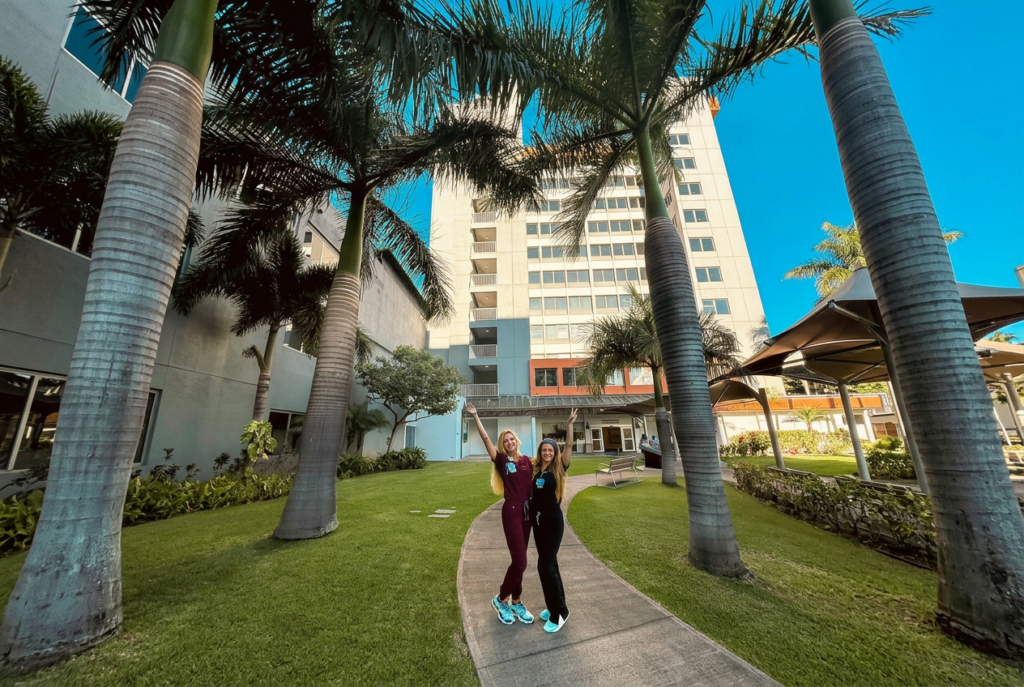
My NICU contract at Kapiʻolani Medical Center for Women & Children on Oahu came with consistent 1:3 patient ratios every shift, almost always with feeder-growers. Travel nurse friends that were still working once my time was up have since updated me that management has been trying to normalize 1:4 patient ratios. Similar to my experience in Austin, Texas (but even more pronounced) travelers were largely assigned the easiest babies and were often grouped together on separate halls rather than mixed in with staff. While this didn’t create the best environment for building staff relationships, it made it incredibly easy to form strong friendships with other travelers. Even though the work itself wasn’t especially mentally stimulating, I often looked forward to smooth shifts spent working alongside friends.
The biggest issue at this hospital wasn’t bedside nursing.. it was management. I was never warned before signing that travelers were routinely scheduled every Friday, Saturday, and Sunday night, which was frustrating. By the time I left, nearly every traveler I knew had some kind of difficult interaction with management. My own issue started when I simply asked if one shift could be moved. A few days later, my recruiter called saying HR reported that I was “refusing to work,” which led to a disappointing chain of miscommunication and threats to have my assignment canceled. At the end of the day, I wasn’t canceled but after that, I was more than ready to leave.
When I did work with staff, they were generally welcoming. The unit itself felt older but functional, with all patients in individual rooms that were spacious enough to work comfortably in once I got used to the setup. The layout is a long main hallway with intersecting halls of varying acuity. It was easy to learn and navigate. They charted in Epic, which was another plus. Pay was around $3,200 per week, which felt excellent even in Hawaiʻi. While the cost of living is high, I still managed to save money while having the time of my life! Though I know plenty of travelers who spent every dollar chasing island adventures. Honestly, the best part of this contract wasn’t work at all. It was what awaited me on every day off.
For reference, I worked here April to November (with time off in between my extension) of 2025. Unlike other hospitals that allow travelers to extend up to 12 months, Kap was different in that they cut you off at 6 months.
Colorado Children’s in Aurora, Colorado
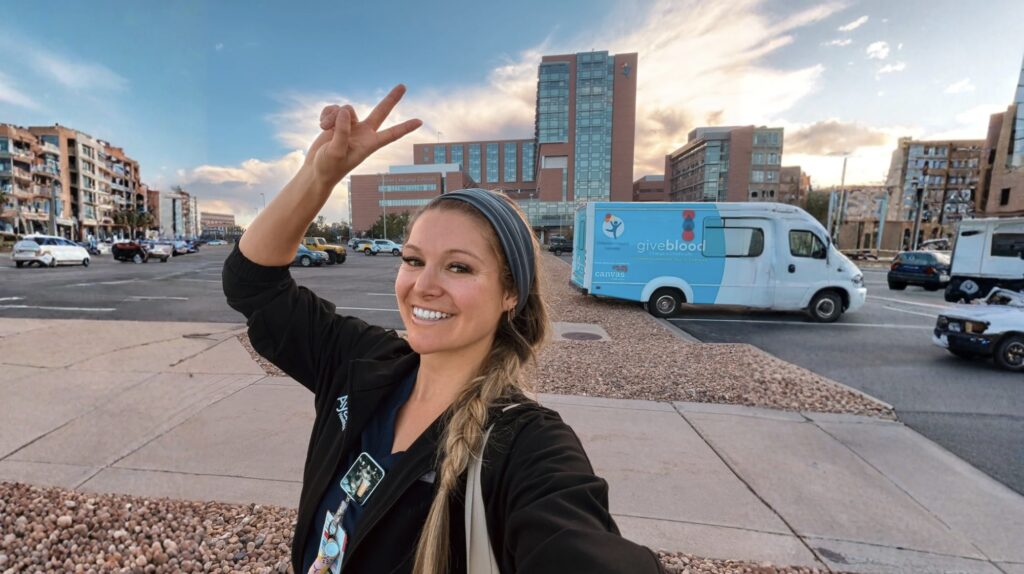
My NICU contract at Children’s Hospital Colorado in Aurora (just east of Denver) came with consistent 1:2 patient ratios, with the one exception being Christmas Eve in PICU when I had three patients. My introduction to the hospital was rough. I floated to PICU every single shift for the first month of my contract. Since I started in December, I chalked a lot of that up to respiratory season. Things eventually settled, and while I still floated often (frequently enough to end up with a PICU boyfriend hehe), it became a much more manageable amount.
Outside of PICU, I floated a few times to Cardiac ICU and a couple of shifts to cardiac step-down. My most intense float shift was on cardiac step-down, where I had three patients and experienced a code that transferred to CICU. Once I actually got settled into the NICU, though, my experience improved significantly. Staff were welcoming, helpful, and clearly accustomed to travelers.
Since I switched to straight day shift after burning out on nights in Hawaiʻi, I didn’t meet many other travelers as most seemed to be on nights. I was okay with that because one of the main reasons I chose Colorado was the existing friendships and loose connections I already had in the area. I also intentionally leaned into my “hosting era,” so I wasn’t needing to build my social life through work. Pay started around $2,700 per week and increased to $2,800 after extending. While locals often describe Colorado as expensive, this honestly felt like one of the most affordable cities I’d worked in recently, and I felt very comfortable financially. I saved around $15,000 during this contract without much intentional effort to do so.
Final Thoughts
Each contract has taught me that no hospital is entirely good or bad. Often the experience comes down to far more than just patient ratios or pay. The best contract for you depends on what season of life you’re in and what you value most. Whether that’s money, location, unit culture, or community.
This post will be continuously updated as I add more travel contracts to my repertoire. Next up is Lucile Packard Children’s Hospital Stanford in Palo Alto, California! I’m excited to see if it lives up to the name.